
İçi Dışı Bir ya da
Bu Dünyanın Şeylerini Yutanlar
Same on the Inside and the Outside, or Those Who Swallow the Things of
This World
Serhan Ada, Ekim 2013
Yapan yapacağını yapmış. (Extramücadele’nin bir 30 masum yılanı bir de 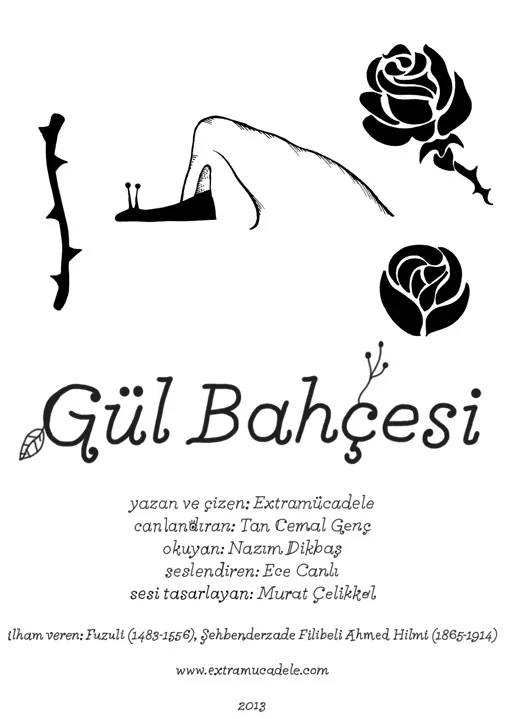 Gül Bahçesi [Gülistan] var.) Aklındakileri harmanlamış, yoğurmuş, fazlalıklarını ayıklamış, dizmiş, şöyle bir bakmış, bitirmiş. Yapılan bitince konu (subject, süje, yani teba) olmaktan çıkıyor. Yapan ne yapsa nafile. Orada öylece duran nesne, kaç boyutu olursa olsun, isterse elle tutulmasın, hatta gözle görülmesin, cisme bürünüyor. İçeriden dışarı çıkıyor. Kimi zaman yapanın gözünü kamaştırıyor, başını döndürüyor. Ki bu durum, üzerinde durulası değil. Asıl üzerinde durulası, düşünülesi olan yaptığını yıkan ve yakanlar. İçinden çıkanın nesne olmasıyla bir türlü iyi geçin/e/meyenler. Hatta, yaptığı yokmuş, hiç olmamış gibi davranan sahici auteur’ler.
Ya yazan, yapılanı nasıl yazacak? Karşısına geçip baktığında, kulak verdiğinde, o karşıda duran şeyi, nesneyi ne kadar kelimeye büründürse, nice kalem oynatsa içine alabilemez. Yorumlar, açıklar, anlam katar lâkin ona boyun eğdiremez, onu tebası kılamaz. Yapılanı yazan, ne etse, ne denli çabalasa, dışındakini içine alamaz. Boşuna dilimizde “üstüne yazmak” denmiyor; yazılan yapılanın üstün(d)e kalıyor. Bazen de kayıp düşüyor diye.
Yazmaya niyet ettikten sonra 30 masum yılana, defalarca, anlamaya çalışmadan, anlatmaya da çalışmayacakmış gibi, öylesine baktım. Sayfaları çevirerek. Gözümü karalardan ayırmadan, akları da aksatmadan, karşıdan ve yakından baktım. Düzden ve tersten. Öylesine. Gül Bahçesi’ni baştan sona seyrettim. Bir daha. Bir daha. Arada durdurdum. Başa döndüm. Nafile.
Yılanlara boyun eğdirip, onları kendime teba (subject) kılıp Gül Bahçesi’nde gayesiz, tasasız volta atmak mümkün olamadı. Benim dışımda kendi başlarına, sarsılmadan durmaya devam ediyorlardı.
Ne yapmalı?
Araya uzun süren bir boşluk girdi.
Rastlantıya inanmakla olmuyor. Hatta rastlantı (belki sadece) inanmayınca oluveriyor. Beklenmeyen yerden, beklenmeyen zamanda çıkıp çarpıyor insana. Kimilerine göre sanat tarihinin kurucu babası Warburg’un Yılan Ritüeli karşıma çıkıverdi. Öylesine. Warburg’un sanat tarihiyle ilişkisini, hatta metnin (ne kadarı en baştan daktiloyla yazılıydı kimbilir!) neredeyse tamamen yılana adanmış olması da ilgimin merkezine oturmadı. Bilimsel yetilerini yeterince kullanamıyor diye kapatıldığı Kreuzlingen’deki klinikten çıkabilmek için bu konuşmayı yapmış olması, antropolojiden bahsedecekmiş gibi yapıp mitolojiye sapıp Rönesans’tan çıkması (ya da bilerek-bilmeyerek çıkmaması) değil, asıl kendi gördüklerinden, kaydettiklerinden bahsedecek gibi yapıp kendisine anlatılanı, nakledileni konuşmasının orta yerine getirmesi ve bunu yaparken de çağlar, temsiller, imgeler, işaretler arasında yılan misali kayıvermesi ilgimi çekti… Rastlantı oldu.
Yılan! Beklenmeyen anda sessizce ve öldüresiye sokuveren. Görünür, izlenir gibiyken toprağa karışan. Sinsi düşman. Öyle mi? Yılan belki rastlantının kendisi.
Havva’nın aklını çelip Adem’in başını derde sokup soyumuzu ebediyyen dünya cehennem-cennetine kovduran. Şeytanın cismi. Bilgi ağacına erişmenin cezası bu dünyada müebbet ikamet. Suçların en masumuna cezaların en hunharı. Az bile. Öyle mi? Biz kovulduk. O yanımızdan, yöremizden hiç eksik olmadı.
Musa, kavmini firavunun şerrinden kurtarmasıyla (ama ne pahasına!) ünlü Musa, yılan (kitaptaki adı: nehaş*) onları ısırmasın diye tunçtan bir yılan anıtı (nehaş nehoşet) yapmayı niye önersin? Gazabından korktuğuna tapın! Zehre kendisinden panzehir. Isırıktan, beladan, gazaptan korunmak için ısıranı baştacı yapmak! Rab’den başka kimin aklına gelebilir… Kitap da böyle söylüyor. Kendini kavmine ispata zorlanan Musa tunçtan yılan anıtı yapılması için Rab’bin sözünü tutuyor. Aradan zaman geçiyor. Yeruşalim’de (Kudüs) tam 29 yıl hüküm süren Yahuda Kralı Hizkiya, Musa’nın tunç yılanını (adı: nehuştan**, putlaştırıldığından adı böyle dönüşmüş) parçalıyor. Tıpkı diğer putlar gibi. Peki neden? Rab’bin gözünde doğru olanı yapmak için. Yaptırmayı bilen vakti gelince yaptırdığını yıktırır; yıktırmayı da bilir. Çelişki kullara mahsus. Kitap bunu da söylüyor. Kimbilir, arada bela atlatılmış olmalı.
Önce göklere çıkarılan sonra yere çalınan yaratık: Hem sürünen, hem kafasını gökyüzüne çeviren hayvan. Sıkıldı ya da sıkıştı mı yerin yedi kat altına, ölüler ülkesine giden, geri geldiğinde hangi akıl uçurucu haberi getirdiği kestirilemez varlık. Korkuyla arzuyu tek bir cisimde toplayıp da habire deri değiştiren, değiştirdikçe de aynı kalan yılan. Daha ışık, karanlıkların arasından yeni çıkmışken, “Tanrı biliyor ki, o ağacın meyvesini yediğinizde gözleriniz açılacak, iyiyle kötüyü bilerek Tanrı gibi olacaksınız”*** diyen yılanın biz fanilerin dünyasından hiç eksik olmamasına şaşırmamalı. Bizi biz yapan, dünyaya (kovulduğumuz cennetin karşısına sürgün edildiğimiz dünyayı koyunca dünya cehennem mi olur?) yollatan yılanı bir arzu, bir korku nesnesi yapıp yanımızdan hiç ayırmıyoruz o gün bu gün. Başka hangi kutsal varlık bunca büyüyü, zehri ve ilacı üstünde taşıyor? Ne kuzu, ne kuş, ne de balık.
Yılanı düşününce, tedavinin atası İstanköy’lü Hipokrat’ın ve onun tanrı-babası Asklepios’un (tıp) yılanı çağrışımı hemen geliyor. Ya kitapların sonuncusu, en bilgesi, Kur’an’da, Tâ- Hâ’da ve Araf’ta yılanın bir Musa’nın değneğine bir kendisine dönüşüp duran mucize nesnesi olmasına ne demeli? Ya sonradan yapılan sayısız temsilde, hatta İstanbul’da, Sultanahmet’teki o sütunda cennet sürgünü insanın onu yüceltirken bile başdüşmanı değnekle sarmaş dolaş tahayyül etmesine?
Warburg’un görmeyip yazdığı ve konuştuğu yılanlarsa bambaşka. Onlar, Amerika yerlilerinin çölünün ortasında, Walpi’de, suratları boyalı ve döğmeli dansçıların ağzında en acayip dansın eşlikçiliğini yapıyorlar. En sonunda çöl ruhlarına kurban edilmeyip dört bir yöne bırakılan çıngıraklı hazretlerin görevi, yağmur duasının meleği olmak. Dansçılar, dişlerinin arasında yılanlarla döner dururken arkadaşları, dişler arasına sıkışmış biçarelerin şaşırıp yanlış bir adım atıvermesini, bir zehirli dil darbesiyle töreni yarıda bıraktırmamasını sağlamak için onların dikkatini dağıtmaya çabalıyor. Bir başka ekipse ola ki kaçıveren yılan olursa onu yakalayıp tilki postlu dansçıların ağzına geri koyuyor. Dans tamamlanınca yerliler yılanları şimşek göndermek üzere yerin dibindeki su kaynaklarına gitsin diye şimşek hızıyla çöle fırlatıyor.
Warburg, görmediği ama görenden çok araştırıp fotoğraflarını filan toplayıp içine sindirdiği bu pagan töreni anlattıktan sonra batının en doğusuna antik Yunan’daki diyonizyak orji şenliklerine, elinde yılanla trans halinde raks eden menad’lara, oradan da Rönesans sanatına kayıyor. Fakat onun kendi deyişiyle “yılanbalığı çorbası” (bu hayvana dilimizden başka bir dilde yılanın adının yakıştırıldığı vaki mi kimbilir?) uslubuyla yazıp okuduğu metni buraya kadar sürpriz içermiyor. Asıl sürpriz bundan sonra. ABD yetkililerinin okullaştırıp birörnek forma giydirerek “ehlileştirdiği” kızılderili okul çocuklarının Ondokuzuncu Yüzyılın sonunda yaptığı evimiz-çevremiz çizimlerinde yerle göğün buluştuğu ufuk çizgisinde şimşek-yılan havadan toprağa yönelen kırık ok olarak karşımıza çıkıyor. Yani, ne kadar ehlileşseler, hatta (beyaz) okul önlüğüyle tektipleşip iyi vatandaşlık yoluna sokulsalar, şimşek-yılan kültürün en dibinden silinip çıkmıyor. En sonunda da Warburg, silindir şapkalı Sam Amca’nın başının üzerindeki elektrik direği ile tellerinin şimşeğin doğadan apartılması olduğunu söyleyip işin içinden sıyrılıyor. Yılanbalığı üslubu ne de olsa, kıvrılmadan duramıyor.
30 yılana bakınca, zamane şahmeranını, yılanların ecesini görmek mümkün. Bizim buraların, Tarsus’un, Mardin’in putperest öz kızı. Sultan sıhhat bulsun diye ihbar edildikten sonra bir de eti yenen o güzelim şahmeran. İntikamı kimbilir hangi zamana havale edilmiş kıssasıyla değil, güzeller güzeli, rengârenk görüntüsüyle imge fakiri dünyamızı şenlendiren varlık. Memed’in yılanları bu güzel varlığın akılla büyü arasında kıvrılan endamını çağrıştıran binbir suretiyle bir “şeyler şenliği” halinde gözlerimizin önünden geçit yapıyor.
Dahası var. Bu 30 yılan süt içmekle, hayvan namına ne varsa gövdeye indirmekle yetinecek gibi değil. Dünyaya dair ne varsa yalamadan, çiğnemeden, parçalamadan bütün bütün yutuyor. Uçaktan, fabrikaya, makastan, testereye, ağaca, çiçeğe. Hani “içi dışı bir” derler, öyle. Bütün nesneleri tek tek içine aldıktan, dünyanın şeyini tükettikten sonra yeni bir dünyanın kurulmasını dilercesine. Tüm bunlarla, etrafımızda görünen, görünmeyen, olup bitenle “bir” olursa Gülistan yeniden olacakmışçasına. Karşıdan baktığınızda derisinin altındakini, sevgiyle içine aldıklarını gösteren içi dışı bir olabilsin diye dışıyla içini eşitlemiş bu güzel varlıkların her birinden muska yapıp tüm belalara, namussuzluklara, ihanete karşı boynunuza asacağınız geliyor. Zehrin ta kendisi panzehir oluyor.
Bir de sanatçının, yapanın dünyası var. Hadi o dünyayı da bir kabalık yapıp iç ve dış dünyalar diye ikiye ayıralım. Her yapılanda bu ikisinden de parçalar ayıklanabilir, iç dünya parçaları bir yana, dış dünya parçaları bir yana ya da altlı üstlü dizilebilir diye işin içinden sıyrılalım. Kolaysa! Kolay değil. Nesneleri, etrafımızdaki şeyleri, bitmek bilmeyen yalanı, çirkinliği kemali afiyetle yiyip bitirip, işinin tebası yap(a)mayan sanatçının iç dünyasından, konu (subject) niyetine ne çıkar?
Extramücadele, her türlü güzellik ve çirkinliği, ıvır zıvırı mürekkebe bulayıp yılanın gövdesine süs yapmış. Şimşeği getirsin diye çölde göğe fırlatılan engerekler misali, 30 yılan, yapanın bundan sonra yapacaklarında başka şeylerin geleceğinin habercisi mi? Cevapsız soru. Cevapsız olması, sorulmasını büsbütün gereksiz kılmıyor.
En başta demiştim.Yazanın yapılanı yazması imkânsız. Yapılanı ne kadar içine almaya kalksa, o kadar onun dışında kalmaya yazgılı. Hatta en çok açıklamaya, yorumlamaya, daha bilgiçce ve karşıdan değil tepeden bakarak söyleyelim “anlamaya” kalktığı anda en dışarıda kalıveriyor yazı. Yapılan bir kez bitti, yapandan çıktı mı içine başka şeyi, kimseyi kabul etmiyor. Konu, tebalıktan çıkıp kendi başına nesne oluveriyor. Ondandır ki, auteur kısmı yaptığına tebelleş olmuyor. Yaptığının özgürlüğüne saygı duyuyor.
Yapılanı yazabilmek belki onu parçalamadan yutabilecek yılan olabilmekle mümkün. Belki.
* Tevrat, Çölde Sayım (21:4)
** Ibid., Krallar (18:4)
*** Ibid, Yaratılış (3:5)
The work is complete; the author has finished his job for all to see. (Extrastruggle has 30 snakes, and a Rose Garden [Gülistan]; so he, too, has finished his job.) He has whipped together his ideas, kneaded them, separated the wheat from the chaff, lined everything up, taken a good look at it, and finished the work off. Once the work is done, the subject matter goes beyond being merely that (subject, or, subjects, the group of people ruled over by another, an authority). It’s no longer in the hands of the maker. The object, sitting there as it is, however many dimensions it may have, whether intangible, or even invisible, becomes incarnate. It emerges from the inside to the outside. Sometimes it dazzles, makes your head spin. But let’s not dwell on that. What we really need to dwell on and contemplate is those who destroy and burn what they make. Those who somehow never – can - manage to get along with the fact that what comes out of them is, after all, an object. Or, the true auteurs, who act as if what they make does not exist, and had never existed in the first place.
So what about the writer, how is he supposed to write about what has been made? Looking at it, listening to it, he cannot absorb the thing, that object that stands before him, however much he fleshes it out with words, and waxes lyrical about it. He may interpret, explain, ascribe meaning, but he cannot force it to submit, he cannot render it his subject. The one who writes about the work cannot take in that which is outside of him, whatever he does, and however great an effort he exerts. It’s not for nothing that in Turkish we use the phrase, “to write on a subject”; the writing always remains on and above the work. And sometimes slides right off it.
Once I set my mind on writing, I looked at the 30 snakes, over and over again, without trying to understand, and ignoring for the time being that I was going to try to explain them, I just looked. I turned the pages. Without removing my gaze from the blacks, and without skipping the whites, from a distance, and close-up. The right side up, and upside down. Just like that. I watched Rose Garden from start to end. Then again. And again. Paused it. Started over. In vain.
I failed to make the snakes submit, to render them my subjects, and to wander aimlessly, carelessly in the Rose Garden. They continued to lie there, on their own, unshaken.
What to do?
A long interval passed.
Believing in happenchance won’t work. In fact, a coincidence happens if you don’t believe in it (perhaps only if you don’t believe in it). It comes out of nowhere, at an unexpected time, and hits you. And so it was that I came across A Lecture on Snake Ritual by Warburg, the founding father of art history according to some. Just like that. Warburg’s relationship with art history, and even the fact that almost the entire text was dedicated to the snake did not become the focus of my attention (who knows how much of the text had originally been written on a typewriter!). What attracted my attention was not the fact that he had delivered this lecture in order to get out of the medical clinic in Kreuzlingen where he had been confined because he had been charged with insufficiently applying his scientific abilities, or the fact that he feigned to talk about anthropology, but took a turn into mythology and arrived at the Renaissance (or in fact, failed to arrive there, wittingly, or unwittingly), but the way in which he feigned to speak about what he had seen and recorded, but placed in the centre of his lecture what had been told and narrated to him, and in doing so, slided among ages, representations, images and signs like a snake. It was a coincidence.
The snake! That of the deadly bite, which comes at an unexpected moment, silently. Seemingly visible and observable, yet then it suddenly disappears in the earth. The sinister enemy. But is that true? The snake is perhaps coincidence itself.
The snake allured Eve, got Adam into trouble, and had our species cast out to the hell-heaven of earth. The devil embodied. The sentence for attaining the tree of knowledge is permanent exile upon this world. The cruellest sentence for the most innocent of crimes. The least of what we deserve. But is that true? We were expelled. He, the snake, was never absent from our side, from our vicinity.
Why would Moses, famous for saving his tribe from the evil of the pharaoh (but at what cost!), propose the building of a bronze serpent monument (nachash nechoshet) to protect them from snakebites (the name of the snake in the Book: nachash*)? Worship he whose wrath you fear! An antidote made from the poison itself. Put the biter on a pedestal to protect yourself from its bite, from trouble, from his wrath! Who else but Yahweh could think of this… That is also what the Book says. Forced into proving himself to his tribe, Moses keeps Yahweh’s word to build the bronze monument. Time passes. Hezekiah, king of Judah, who reigned over Jerusalem for 29 years, destroyed Moses’ bronze serpent because it had become an object of idolatrous worship (its name: nehushtan**, transformed because it had become an idol). Just like all the other idols. But why? To do what was right in Yahweh’s eyes. He who knows how to order the construction of a building, has that building destroyed when the time comes; he also knows how to destroy. Contradiction is reserved for the subjects of God. The Book says that, too. Who knows, perhaps the trouble had been thwarted in the meantime.
The creature, which was first raised to the skies, then slammed upon the earth: Creeping on the ground, while simultaneously its head is turned to the sky. The creature when bored, or in dire straits, escapes to seven levels underground to the land of the dead, about which one can never predict what kind of mind-blowing news it will return. Constantly shedding its skin, but remaining the same throughout the process; the snake, uniting fear and desire in a single body. We should not be surprised that the snake, who when light had only just emerged from the darkness said, “For God knows, that when you eat from that tree, your eyes will be opened, and you will be like God, knowing good and evil,”*** is never missing from the world of us mortals. Since that day, we have always kept the snake by our side, it made us what we are, and had us sent to earth: it is an object of desire, and fear. Which other holy creature carries so much magic, poison and remedy? Neither the lamb, nor the bird, nor the fish.
When one thinks of the snake, one immediately recalls Hippocrates of Kos, and his God-father Asclepius’s serpent, representing medicine. Then what about the way in which, in the surahs of Ta-Ha and A’raf, in the last and wisest of the holy books, the Quran, the snake is an object of miracle, switching between two appearances, turning into Moses’s rod, and then becoming itself once again? What about countless representations produced later, for instance, on that column in Sultanahmet, Istanbul, the way in which the human being, exiled from heaven, imagines the snake, even when it wants to sublimate it, all snuggled up with its archenemy, the rod?
The snakes, which Warburg didn’t see, but wrote and spoke about, are quite different. In the middle of the desert of Native Americans, they accompany the strangest dance in the mouths of Walpi dancers, whose faces are painted and tattooed. The task of their Excellencies the Rattlesnakes, which are not sacrificed to the spirits of the desert, and are set free into all four directions, is to become angels of the rain prayer. As dancers whirl, carrying snakes between their teeth; their friends try to distract the snakes, so that the poor lot who have them stuck between the teeth do not get confused and take a wrong step, and cause the ceremony to be cut short with a poisonous stroke of the tongue. Another team is also on guard to catch any snake that escapes, and to reposition it in the mouths of the dancers clad in fox-fur. Once the dance is complete, the natives hurl the snakes into the desert at lightning pace so they go and visit the water-springs underground.
Warburg, after recounting this pagan ceremony, which he hadn’t seen, but had researched more than anyone who had, and digested, having collected photographs of it and all, moves towards the most-easterly point of the West, to the Dionysian orgiastic festivals of Ancient Greece, to maenads dancing in a trance, carrying snakes in their hands, and from there, to Renaissance art. However, this text, which in his own words, he reads and writes in an “eel-soup-style” (an eel, in Turkish, is a snakefish: does any other language associate the name of the snake with this creature?) contains no surprises thus far. The real surprise comes after. In the ‘our home-our environment’ drawings made in the late 19th century by American Indian school children, schooled and “tamed” by US officials by dressing them in uniforms, at the horizon, or the line where the earth meets the sky, the lightning-snake appears as a broken arrow aiming from the sky towards the earth. In other words, however much they are tamed, and forced into the path of good citizenship in white school uniforms, the lightning-snake cannot be erased from the ultimate depth of culture. And in the end, Warburg, wriggles himself out of the situation by stating that the utility pole and electrical wires above the head of Uncle Sam wearing a top hat was an appropriation, from nature, of lightning. This is the “eel-soup-style”, after all, he can’t help but twist and turn.
Looking at the 30 serpents, it is possible to detect a shahmaran of the times, the queen of serpents. The own pagan daughter of our lands, of Tarsus, of Mardin. The beautiful shahmaran whose meat was consumed, after being informed against to provide a cure for the Sultan. This creature, that enlivens our image-poor world not with its parable in which revenge has been postponed to who knows when, but with its flamboyant, most beautiful appearance. Memed’s snakes parade before our eyes, as a “festival of things”, with their thousand and one images resembling the stature of this beautiful creature that meanders between intelligence and magic.
There is more to it. These 30 snakes do not seem like they will content themselves with drinking milk, and devouring whatever animal they find around. They swallow whole everything about the world, without licking, chewing or breaking them down. From aeroplanes to factories, from scissors to saws, trees, flowers. “Same on the inside and the outside,” as they say in Turkish. After it has taken in all the objects one by one, after having consumed everything about this world, as if to wish a new world would be founded. As if Gulistan would come alive if it were to become “one” with all this, with everything visible or invisible, everything taking place around us. These beautiful creatures, which reveal what they keep under their skin, what they have taken in with love, which have equalized their outside and inside so that they can become same on the inside and the outside; make you want to turn each and every one of them into a good-luck charm and place them around your neck to ward off all manners of trouble, ignominy and betrayal. The poison itself becomes the antidote.
Then there is also the world of the artist, the maker. Allow us then to be crude, and divide that world into two, too, as interior and exterior worlds. Let us escape from explaining the matter by saying, in everything that is done, parts of both these worlds may be detected, and parts of the interior world and parts of the exterior world may be lined up on either side, or from top to bottom. If you dare! But it is not that easy. What can be extracted as subject matter from the interior world of an artist, who does not, or cannot happily consume and render the subject of his work these objects, these things around us, these endless lies and all this ugliness?
Extrastruggle has smeared all manners of beauty and ugliness and bric-a-brac in ink, and made ornaments of them for the body of the snake. Like vipers thrust up in the sky in the desert so they bring along lightning, are the 30 snakes harbingers of all the different things the future might bring along in the maker’s work? A question with no answer. However, the lack of an answer, does not render its asking entirely unnecessary.
I said it right at the beginning. It is impossible for the one who writes to write on what has been made. The more he tries to grasp what has been made, the more he is destined to remain outside of it. In fact, the more it tries to explain, to interpret, and let us say it, not pedantically, and from the opposite side, but looking at it from above, the moment it tries to “understand”, writing remains at the outermost point. Once the work is finished, and has departed its maker, it accepts nothing, or no one else. The subject matter is no longer a subject, it becomes an object in its own right. This is why auteurs do not pester their work once they are finished with it. They respect its freedom.
To write about what has been done is perhaps possible by becoming the snake that can swallow it without tearing it to pieces. Perhaps.
* Numbers, 21:4
** Kings 18:4
*** Genesis 3:5
Translation: Nazım Dikbaş